Español Uno (1):
Today's Learning Objectives:
1. To our "para empezar" ("in order to begin") warm-up.
¿Qué hora es?
Son las doce y treinta y uno. [Answer: 12:31]
Son las ocho y cuarto. [Answer: 8:15]
Son las cinco y cuarenta y cinco. [Answer: 5:45]
Es la una y cinquenta y cuatro. [Answer: 1:54]
Son las once y dieciséis. [Answer: 11:16]
Las matemáticas en español (más = plus, menos = minus, son = equals)
Tres más nueve son doce. [Answer: 3 + 9 = 12]
Catorce más trece son veintisiete. [Answer: 14 + 13 = 27]
Treinta y uno más diecinueve son cinquenta. [Answer: 31 + 19 = 50]
Once menos once son cuatro. [Answer: 11 + 4 = 7]
Ciento veinticinco menos cuarenta y cinco son ochenta. [Answer: 125 + 45 = 80]
2. Listen to our new song of the week: "Me pregunto." Good job catching the missing words: estás, va, sólo
3. Practice our gestures. How well can you produce the Spanish when I gesture for you? (Not bad, Spanish 1!!)
4. Take a numbers quiz. Remember, the value of assessments is that they provide us important information. If you did not get an A or B on our number quiz, you know that you need to put in some extra time studying those numbers.
5. Read more in Pobre Ana.
New vocabulary
saca buenas notas = s/he gets good grades
(1st period only):
un centro comercial = a shopping center
compra = s/he buys
siempre = always
le pide = s/he asks him/her for
Homework: None, but remember that repetition is the KEY to language acquisition, so anything you choose to do to give yourself extra repetition is worthwhile.
Español Dos (2):
Submitted: Yesterday's reflexive verb worksheet.
Today's Learning Objectives:
1. To our "para empezar" ("in order to begin") warm-up.
¿Cómo se dice “to wash”? [Answer: lavar]
¿Cómo se dice “to wash myself”? [Answer: lavarme]
¿Cómo se dice “I need to wash myself”? [Answer: necesito lavarme]
¿Cuál es otra versión de “I need to wash myself”? [Answer: me necesito lavar]
¿Cómo se dice “to stand yourself up”? [Answer: levantarte]
¿Cómo se dice “you have to stand yourself up”? [Answer: tienes que levantarte]
¿Cuál es otra versión de “you have to stand yourself up”? [Answer: te tienes que levantar]
¿Cómo se dice “I should sit myself down”? [Answer: debo sentarme / me debo sentar]
¿Cómo se dice “they want to bathe themselves”? [Answer: quieren bañarse / se quieren bañar]
¿Cómo se dice “we can stand ourselves up”? [Answer: podemos levantarnos / nos podemos levantar]
2. Listen to our new song of the week: "Me pregunto." Good job catching the missing words: lejos, gente, viene, para
What type of verb is "me pregunto"? [Answer: a reflexive verb]
3. Practice our old gestures. How well can you produce the Spanish when I gesture for you? (Not good, Spanish 2!! You need to make up the difference and study your target vocabulary.)
4. Learn some new gestures.
New gestures:
se ducha (s/he showers him/herself)
se viste (s/he dresses him/herself)
se peina (s/he combs him/herself)
toca el contrabajo (s/he plays the bass)
reparte el periódico (s/he delivers the newspaper)
5. Finish (or nearly finish, 4th hour....) the story "Ralph, el desordenado." Remember, it's your responsibility to write down the meanings of any previously unknown words.
New vocabulary:
le robó dos dólares a su hermanito (s/he stole two dollars from his/her little brother)
¡No le robes…! (Don’t steal….from him/her….!)
Sólo iba a poder comer (s/he was only going to be able to eat)
¡No te pongas…! (Don’t put on…!)
pantaloncitos (little pants)
empezó a correr (s/he started to run)
los dos dólares se le cayeron (the two dollars fell from him)
alguien se los robó (someone stole them from him)
mientras (while)
(5th & 6th periods only):
no había desayunado (s/he hadn’t eaten)
sólo había bebido (s/he had only drunk)
eso (that)
tanto (so much)
De repente (Suddenly)
pesadilla (nightmare)
Homework: Make flashcards for your gesturing vocabulary. Remember, the onus is on YOU to learn your vocabulary if the repetition we get in class isn't enough.
skip to main |
skip to sidebar

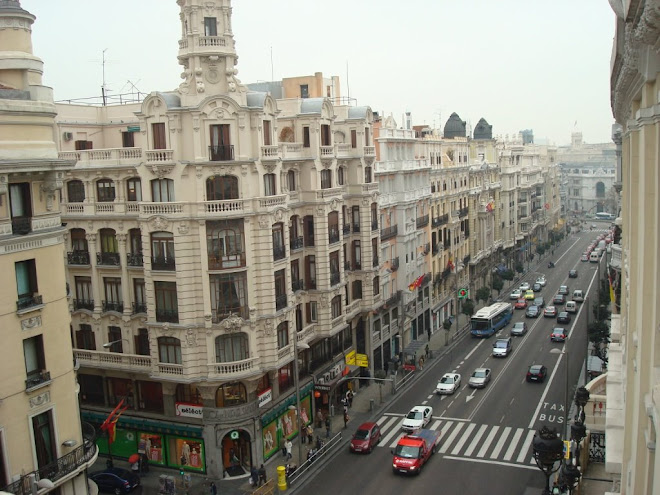
Not far from my apartment in 2002-2003
A Resource for All of Profe Nick's Spanish Students in Washington

Si tuviera un millón de dólares.... (If I had a million dollars....) [Cool, but not for free]
- Comcast "Selecto Pack"
Archivo del blog
-
►
2010
(148)
- ► septiembre (20)
-
►
2009
(164)
- ► septiembre (18)
-
▼
2008
(72)
-
▼
octubre
(23)
- viernes, el treinta y uno de octubre del dos mil ocho
- jueves, el treinta de octubre del dos mil ocho
- jueves, el veintinueve de octubre del dos mil ocho
- martes, el veintiocho de octubre del dos mil ocho
- lunes, el veintisiete de octubre
- viernes, el veinticuatro de octubre del dos mil ocho
- jueves, el veintitrés de octubre del dos mil ocho
- miércoles, el veintidós de octubre del dos mil ocho
- martes, el veintiuno de octubre del dos mil ocho
- lunes, el veinte de octubre del dos mil ocho
- viernes, el diecisiete de octubre del dos mil ocho
- jueves, el dieciséis de octubre del dos mil ocho
- miércoles, el quince de octubre del dos mil ocho
- martes, el catorce de octubre del dos mil ocho
- lunes, el trece de octubre del dos mil ocho
- viernes, el diez de octubre del dos mil ocho
- jueves, el nueve de octubre de dos mil ocho
- miércoles, el ocho de octubre del dos mil ocho
- martes, el siete de octubre del dos mil ocho
- lunes, el seis de octubre del dos mil ocho
- viernes, el tres de octubre del dos mil ocho
- jueves, el dos de octubre del dos mil ocho
- miércoles, el primero de octubre del dos mil ocho
- ► septiembre (20)
-
▼
octubre
(23)
Spanish Is All Around Us...Have You Considered...?
- -- Peeking at the Spanish Directions of a Purchased Household Item/Appliance and Trying to Make Sense of Some of It
- -- Setting Your TV to Spanish and Navigating It...Ask For Permission First
- -- Setting Your Cell Phone to Spanish and Navigating It
- -- Purchasing Food from the "Hispanic Foods" Supermarket Aisle and Following the Cooking Directions in Spanish
- -- Subscribing to "People en español" o "National Geographic en español"
- -- Checking out Spanish Children's Books at the Local Library
- -- Perusing a Free Spanish Newspaper from a Store Specializing in Latin American Groceries
- -- Using the Grocery Store Self Check-Out in Spanish
- -- Installing iTunes in Spanish
Spanish Study Links
Local Spanish Resources
- Univisión -- Canal 29 en la Tele en "el Eastside"
- "Día de los Muertos" Festival -- November 1-2, 2008 -- Seattle Center
- "Seattle Fiestas Patrias" Festival -- September 13-14, 2008 -- Seattle Center
- KWMG "La Magia" -- 1210 AM -- A Fusion of International Spanish
- KKMO "Radio Sol" -- 1360 AM -- Regional Mexican Music
- KXPA "La Buena" -- 1540 AM -- 88 hrs. Spanish Programming Weekly
- KDOW "La Jefa" -- 1680 AM -- Spanish Coverage of Seattle Sounders and Seattle Mariners Games
- KDDS "La Gran D" -- Radio 99.3 FM -- Modeled After Mexican Radio
Authentic Spanish Sources
Spanish Entertainment Links
Datos personales

- Señora Nick
- Any questions about the content of this blog should be directed via email to Profe Nick, not the Issaquah School District.
Madrid: Calle Gran Vía
Not far from my apartment in 2002-2003