Español Uno (1):
Today's Learning Objectives:
1. Complete our "para empezar" ("in order to begin"): workbook page 2-6. Discussion of when we use the "informal you" (tú), the "formal you" (usted) and you all (ustedes).
The "informal you," tú, will generally be used for people you know well, people who are your peers and people who are younger than you.
The "formal you," usted, will generally be used for people who are in a position of authority, strangers, or anyone to whom you are wanting to show respect.
The customs of using tú vary not only from place to place, but from person to person. As a general rule, it's always safest to address a new person as usted and let them tell you to address them as tú.
2. Listen to our song of the week: "Me pregunto." Good job catching the remaining words: va, espero, habla.
3. Finish reading chapter one of Pobre Ana.
New words:
(1st period):
centro comercial (shopping center / mall)
compra (s/he buys)
siempre (always)
le pide (s/he asks him/her for)
suficiente (sufficient)
(1st & 2nd periods):
comida buena (good food)
carne (meat)
quieren economizar (they want to economize)
4. Illustrate details of the first chapter of Pobre Ana as the teacher reads ten details aloud.
--Hay una muchacha que se llama Ana.
--Ana no tiene un montón de dinero.
--Pero Ana quiere un montón de dinero.
--Ana quiere ropa y un carro Ford Mustang.
--Las amigas de Ana tienen un montón de dinero.
--Ana está triste porque no tiene dinero.
--Ana va a la escuela en un autobús amarillo.
--Las amigas de Ana no van a la escuela en un autobús amarillo; van en el carro Ford Mustang.
--Las amigas compran ropa Calvin Klein; Ana compra ropa de Wal-Mart.
--Ana está enojada con su mamá, su papá, su hermana y su hermano.
5. Utilizing the illustrations, write a description of what we learned in chapter one of Pobre Ana. If you do not need all ten minutes to retell, use any remaining time to edit what you wrote. Go back and look at your punctuation and spelling. Is there anything that needs correcting? Are there any extra details you can add?
6. (1st period only): Receive Tuesday's number quiz. Remember, the value of assessments is what information they communicate to us. How well did you do with recognition of your numbers? If you struggled, you need to study your numbers! Remember, recognition precedes production.
Homework: None. We will have a bit of class time Friday to work on Wednesday's "Dice Game." What you don't finish in class will be homework over the weekend.
Español Uno (1):
Today's Learning Objectives:
1. Review yesterday's homework: 2-1 & 2-5 in the workbook.
2. Listen and sing our song, "Me pregunto."
3. Receive an official chapter two vocabulary list and record the meanings of our vocabulary words.
4. Read chapter one of the novel Pobre Ana bailó tango.
New words:
--trabajaba (s/he used to work)
--pensaba (s/he used to think)
--por ejemplo (for example)
--nunca le daba (s/he never used to give him/her….)
--se enojaba (s/he would get angry)
--además (in addition)
--nunca le ayudaban (they never used to help him/her)
--tenía envidia (s/he had envy)
--les habían dado autos (they had given cars to them)
--para comprarlos (in order to buy them)
--estaba muy celosa (she was very jealous)
--por supuesto (of course)
--se quejaba (s/he used to complain)
--algo cambió su vida para siempre (something changed his/her life forever)
--más detalles (more details)
--la escuela pagaría los gastos (the school would pay the expenses)
--no tendría que pagar nada (wouldn’t have to pay anything)
--Aprendió tanto. (S/he learned so much.)
--volvió a California (s/he returned to California)
--De hecho (In fact)
--se sentía muy agradecida (she felt very thankful)
--la querían (they loved her)
5. (4th & 5th periods only): Illustrate six details of chapter one of Pobre Ana bailó tango as the teacher reads aloud. Save those illustrations for tomorrow.
(6th period only): Red Ribbon Week announcement and prizes.
Homework: None, although remember that repetition is the KEY to language acquisition. It's never a bad idea to make flashcards of new words--like those on our official chapter two vocabulary list.
skip to main |
skip to sidebar

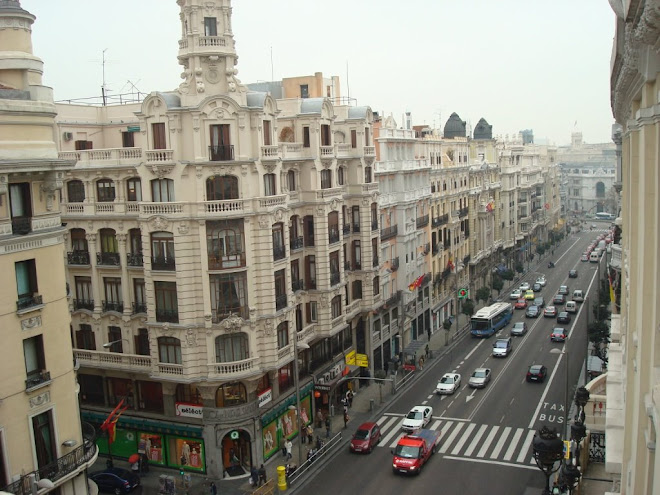
Not far from my apartment in 2002-2003
A Resource for All of Profe Nick's Spanish Students in Washington

Si tuviera un millón de dólares.... (If I had a million dollars....) [Cool, but not for free]
- Comcast "Selecto Pack"
Archivo del blog
-
►
2010
(148)
- ► septiembre (20)
-
►
2009
(164)
- ► septiembre (18)
-
▼
2008
(72)
-
▼
octubre
(23)
- viernes, el treinta y uno de octubre del dos mil ocho
- jueves, el treinta de octubre del dos mil ocho
- jueves, el veintinueve de octubre del dos mil ocho
- martes, el veintiocho de octubre del dos mil ocho
- lunes, el veintisiete de octubre
- viernes, el veinticuatro de octubre del dos mil ocho
- jueves, el veintitrés de octubre del dos mil ocho
- miércoles, el veintidós de octubre del dos mil ocho
- martes, el veintiuno de octubre del dos mil ocho
- lunes, el veinte de octubre del dos mil ocho
- viernes, el diecisiete de octubre del dos mil ocho
- jueves, el dieciséis de octubre del dos mil ocho
- miércoles, el quince de octubre del dos mil ocho
- martes, el catorce de octubre del dos mil ocho
- lunes, el trece de octubre del dos mil ocho
- viernes, el diez de octubre del dos mil ocho
- jueves, el nueve de octubre de dos mil ocho
- miércoles, el ocho de octubre del dos mil ocho
- martes, el siete de octubre del dos mil ocho
- lunes, el seis de octubre del dos mil ocho
- viernes, el tres de octubre del dos mil ocho
- jueves, el dos de octubre del dos mil ocho
- miércoles, el primero de octubre del dos mil ocho
- ► septiembre (20)
-
▼
octubre
(23)
Spanish Is All Around Us...Have You Considered...?
- -- Peeking at the Spanish Directions of a Purchased Household Item/Appliance and Trying to Make Sense of Some of It
- -- Setting Your TV to Spanish and Navigating It...Ask For Permission First
- -- Setting Your Cell Phone to Spanish and Navigating It
- -- Purchasing Food from the "Hispanic Foods" Supermarket Aisle and Following the Cooking Directions in Spanish
- -- Subscribing to "People en español" o "National Geographic en español"
- -- Checking out Spanish Children's Books at the Local Library
- -- Perusing a Free Spanish Newspaper from a Store Specializing in Latin American Groceries
- -- Using the Grocery Store Self Check-Out in Spanish
- -- Installing iTunes in Spanish
Spanish Study Links
Local Spanish Resources
- Univisión -- Canal 29 en la Tele en "el Eastside"
- "Día de los Muertos" Festival -- November 1-2, 2008 -- Seattle Center
- "Seattle Fiestas Patrias" Festival -- September 13-14, 2008 -- Seattle Center
- KWMG "La Magia" -- 1210 AM -- A Fusion of International Spanish
- KKMO "Radio Sol" -- 1360 AM -- Regional Mexican Music
- KXPA "La Buena" -- 1540 AM -- 88 hrs. Spanish Programming Weekly
- KDOW "La Jefa" -- 1680 AM -- Spanish Coverage of Seattle Sounders and Seattle Mariners Games
- KDDS "La Gran D" -- Radio 99.3 FM -- Modeled After Mexican Radio
Authentic Spanish Sources
Spanish Entertainment Links
Datos personales

- Señora Nick
- Any questions about the content of this blog should be directed via email to Profe Nick, not the Issaquah School District.
Madrid: Calle Gran Vía
Not far from my apartment in 2002-2003