Español Uno (1):
Announcement: Due to today’s Talent Show Assembly, all classes except 2nd period are shortened to 47 minutes.
Today’s Agenda:
1. Quickly practice conjugating ir & pensar (e-->ie) in the present.
How do we ask about weekend plans?
--¿Qué vas a hacer este fin de semana?
--¿Qué piensas hacer este fin de semana?
Quick conversation with table group members & reporting out about members’ plans for the weekend.
2. Listen to and sing our song of the week: “Inevitable.”
3. Working in table groups, define our high-frequency words for stories. Your first one-on-one story with me can be in either the present or past. You choose whichever you feel more comfortable with.
4. Use the answer key to correct what table groups wrote for the high-frequency word definitions.
5. Discuss the speaking rubric and the realistic expectations students should have coming into the first one-on-one story speaking assessment.
A student who does no preparation on their own will likely fall into the “approaches target – C range” at best.
A student who does some preparation will likely fall into the “meets target – B range / approaches target – C range.”
A student who does much preparation will likely fall into the “exceeds target – A range."
Students who come in best prepared for speaking (and writing) assessments have usually:
--reread our stories (over and over!)
--made flashcards of high-frequency words and studied them (repeatedly)
--practiced telling spontaneous stories aloud (using pictures they drew or pictures drawn by others)
5. (2nd hour only): Begin the homework.
Homework: Illustrate a story sequence carefully following the instructions. We will use the illustrations in class on Monday and Tuesday to practice telling spontaneous stories.
Español Dos (2):
Announcement: Classes shortened to 47 minutes due to Talent Show Assembly.
Today’s Agenda:
1. Practice some of our Spanish 2 Essential Questions: #’s 1, 6, 10, 15, & 20.
2. Listen to and sing our song of the week: “Inevitable.”
3. Practice our “positive tú commands.”
------Buy it! (the book)…………………………….Cómpralo.
------Listen to me!...................................Escúchame.
------Aim it! (the flashlight)…………………….Dirígela.
------Sing it! (the song)……………………………Cántala.
------Sing to him!....................................Cántale.
------Throw them! (the fireworks)…………Tíralos.
------Build it! (the sand castle)……………….Constrúyelo.
------Climb it! (the tree)………………………….Trépalo.
------Greet them! (the nieces)………………Salúdalas.
------Bathe (Wash) yourself!..................Lávate.
4. Practice using circumlocution to define our chapter 7 vocabulary words.
Circumlocution (working your way around a word) is a VERY important skill when using a foreign language. When you can’t come up with a specific word (whether you’ve forgotten it or just don’t know the word), it is important to be able to describe the word so that your listener understands.
There are many easy ways to start of your circumlocution phrases:
--It’s a place where…....................................Es un lugar donde….
--It’s a person that…....................................Es una persona que….
--It’s a thing that….......................................Es una cosa que….
--I use it for/in order to…............................Lo/La uso para….
--I need it for/in order to…..........................Lo/La necesito para….
--It costs….......................................................Cuesta….
--It’s of ___ size.........................................….Es de tamaño….
--You find it at.............................................…Lo/La encuentras en….
--It’s of...(fabric).............................................Es de….
--It’s the opposite of…....................................Es el opuesto de…. / Es el contrario de….
--It’s what….....................................................Es lo que….
--It’s the appliance that…...............................Es el aparato que….
--We wear it on…..............................................Lo/La llevamos en….
--It’s a synonym of….......................................Es un sinónimo de….
--It’s the antonym of…....................................Es el antónimo de….
--It’s the action of….........................................Es la acción de….(+inf.)
--It’s a type of…...............................................Es un tipo de….
--It’s similar to..............................................….Es similar a….
--It’s not similar to........................................…No es similar a….
--It describes…..................................................Describe….
--It means that…...............................................Significa que….
--It’s something that.....................................….Es algo que….
--It’s a way of.................................................….Es una manera de….
5. (4th & 5th periods only): Play a couple rounds of Simon Says.
Homework: Fully define five of our chapter 7 vocabulary words using the circumlocution phrases above. Your definitions should be so complete that there is no doubt what/who is being described.
skip to main |
skip to sidebar

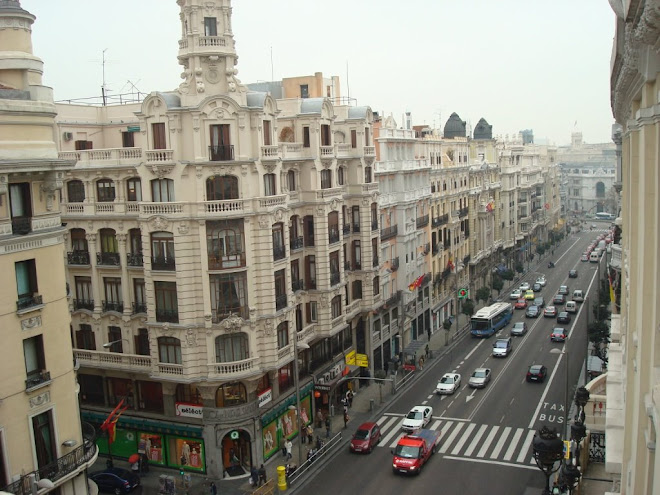
Not far from my apartment in 2002-2003
A Resource for All of Profe Nick's Spanish Students in Washington

Si tuviera un millón de dólares.... (If I had a million dollars....) [Cool, but not for free]
- Comcast "Selecto Pack"
Archivo del blog
-
▼
2010
(148)
- ► septiembre (20)
-
▼
marzo
(20)
- viernes, el veintiséis de marzo del dos mil diez
- jueves, el veinticinco de marzo del dos mil diez
- miércoles, el veinticuatro de marzo del dos mil diez
- martes, el veintitrés de marzo del dos mil diez
- lunes, el veintidós de marzo del dos mil diez
- viernes, el diecinueve de marzo del dos mil nueve
- jueves, el dieciocho de marzo del dos mil diez
- miércoles, el diecisiete de marzo del dos mil diez
- martes, el dieciséis de marzo del dos mil diez
- lunes, el quince de marzo del dos mil diez
- viernes, el doce de marzo del dos mil diez
- jueves, el once de marzo del dos mil diez
- miércoles, el diez de marzo del dos mil diez
- martes, el nueve de marzo del dos mil diez
- lunes, el ocho de marzo del dos mil diez
- viernes, el cinco de marzo del dos mil diez
- jueves, el cuatro de marzo del dos mil diez
- miércoles, el tres de marzo del dos mil diez
- martes, el dos de marzo del dos mil diez
- lunes, el primero de marzo del dos mil diez
-
►
2009
(164)
- ► septiembre (18)
Spanish Is All Around Us...Have You Considered...?
- -- Peeking at the Spanish Directions of a Purchased Household Item/Appliance and Trying to Make Sense of Some of It
- -- Setting Your TV to Spanish and Navigating It...Ask For Permission First
- -- Setting Your Cell Phone to Spanish and Navigating It
- -- Purchasing Food from the "Hispanic Foods" Supermarket Aisle and Following the Cooking Directions in Spanish
- -- Subscribing to "People en español" o "National Geographic en español"
- -- Checking out Spanish Children's Books at the Local Library
- -- Perusing a Free Spanish Newspaper from a Store Specializing in Latin American Groceries
- -- Using the Grocery Store Self Check-Out in Spanish
- -- Installing iTunes in Spanish
Spanish Study Links
Local Spanish Resources
- Univisión -- Canal 29 en la Tele en "el Eastside"
- "Día de los Muertos" Festival -- November 1-2, 2008 -- Seattle Center
- "Seattle Fiestas Patrias" Festival -- September 13-14, 2008 -- Seattle Center
- KWMG "La Magia" -- 1210 AM -- A Fusion of International Spanish
- KKMO "Radio Sol" -- 1360 AM -- Regional Mexican Music
- KXPA "La Buena" -- 1540 AM -- 88 hrs. Spanish Programming Weekly
- KDOW "La Jefa" -- 1680 AM -- Spanish Coverage of Seattle Sounders and Seattle Mariners Games
- KDDS "La Gran D" -- Radio 99.3 FM -- Modeled After Mexican Radio
Authentic Spanish Sources
Spanish Entertainment Links
Datos personales

- Señora Nick
- Any questions about the content of this blog should be directed via email to Profe Nick, not the Issaquah School District.
Madrid: Calle Gran Vía
Not far from my apartment in 2002-2003