Español Uno (1):
Today’s Agenda:
1. Practice our words for “this/these/that/those/that (far away)/those (far away).”
--that bronzer…………………………..ese bronceador
--this camara…………………………….esta cámara
--that umbrella (far away)………..aquel paraguas
--those passports……………………..esos pasaportes
--these boots…………………………….estas botas
--those suitcases (far away)………aquellas maletas
--these gloves……………………………estos guantes
--that ski cap (far away)…………….aquel gorro
--those pyramids………………………esas pirámides
--this coat………………………………….este abrigo
**Keep in mind that the words for "this/these/..." WILL be on your upcoming grammar quiz.
2. Listen to our song of the week: “Inevitable.” Nice job catching the last four missing words: lluvia, encuentro, empezar, peor.
3. Finish reading “Las vacaciones terribles" in table groups. We reviewed the meanings of the underlined words in the story:
--1. (it) wanted to go
--2. (it) planned to swim
--3. (they) put
--4. (they) went
--5. (it) wanted to go
--6. (it) planned to ski
--7. (it) had/got
--8. (it) had/got
--9. (it) said
--10. (they) went
--11. it was
--12. (they) didn’t have
--13. (it) put on
--14. it was windy
--15. it was snowing
--16. (they) cost
--17. (they) had
--18. (they) were
4. Illustrate four scenes from the story:
--La familia Ortega quería ir de vacaciones a Puerto Rico. Ellos pusieron trajes de baño, anteojos de sol y bronceador en una maleta.
--La familia Martínez quería ir de vacaciones a Chile. Ellos pusieron abrigos, guantes, bufandas y botas en una maleta.
--Cuando la familia Ortega llegó a Puerto Rico, tuvo una maleta con abrigos, guantes, bufandas y botas. Ellos se pusieron los abrigos y fueron al mar.
--Cuando la familia Martínez llegó a Chile, tuvo una maleta con trajes de baño, anteojos de sol y bronceador. Ellos se pusieron los trajes de baño y fueron a esquiar.
5. Practice retelling this story to a partner. Listen to a few brave volunteers share their version of the story with the class. Nice job!
Homework: Keep preparing yourself for the upcoming grammar, vocab & speaking assessments.
Español Dos (2):
Today’s Agenda:
1. Discuss commands. As we wrap up chapter 7 and head into Spring Break, we will be working with “positive tú commands” (run!, walk! stop!). [A "negative" command would have "don't": "don't run!," "don't do that!"]
We already have become used to hearing a lot of these “positive tú commands," as many of our gestures can be used as commands:
--escribe (write!), corre (run!), camina (walk!), recuerda (remember!), abraza (hug!)
Your ears have also become used to hearing these “positive tú commands” with pronouns (it/her/him/them/yourself) added to the end. Your eyes, however, might not be used to what they look like yet.
--léela (read it), pregúntale (ask him/her), contéstame (answer me), acuéstate (go yourself to bed), tócame el piano (play me the piano), cuélgalo (hang it up), pruébatelo (try it on yourself), pórtate (behave yourself), empújalo (push it/him), despídete (say good bye)
We also have eight irregular positive tú commands to learn. Fortunately, there is a little song to accompany them: “Ten, ven, pon, sal, di, sé, ve, haz.”
2. Listen to our song of the week: "Inevitable." Nice job catching the remaining four phrases: supe, mismo, decirlo, te conozco.
3. Practice our gestures and sing our songs.
4. Practice our new “long form” possessive adjectives and our possessive pronouns in table groups.
Homework: Study your vocabulary for your upcoming vocabulary quiz.
skip to main |
skip to sidebar

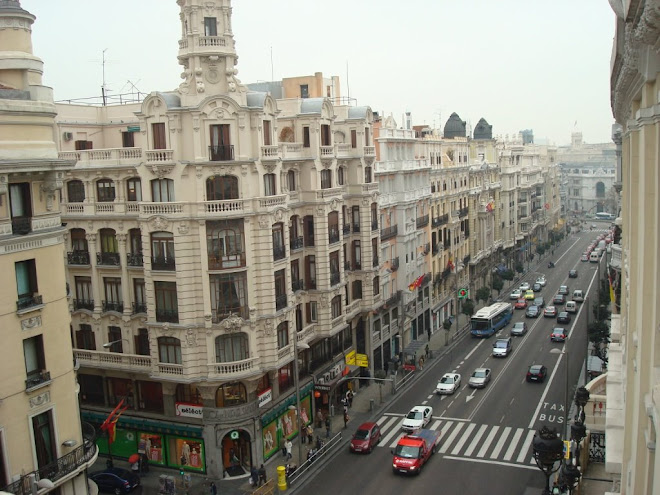
Not far from my apartment in 2002-2003
A Resource for All of Profe Nick's Spanish Students in Washington

Si tuviera un millón de dólares.... (If I had a million dollars....) [Cool, but not for free]
- Comcast "Selecto Pack"
Archivo del blog
-
▼
2010
(148)
- ► septiembre (20)
-
▼
marzo
(20)
- viernes, el veintiséis de marzo del dos mil diez
- jueves, el veinticinco de marzo del dos mil diez
- miércoles, el veinticuatro de marzo del dos mil diez
- martes, el veintitrés de marzo del dos mil diez
- lunes, el veintidós de marzo del dos mil diez
- viernes, el diecinueve de marzo del dos mil nueve
- jueves, el dieciocho de marzo del dos mil diez
- miércoles, el diecisiete de marzo del dos mil diez
- martes, el dieciséis de marzo del dos mil diez
- lunes, el quince de marzo del dos mil diez
- viernes, el doce de marzo del dos mil diez
- jueves, el once de marzo del dos mil diez
- miércoles, el diez de marzo del dos mil diez
- martes, el nueve de marzo del dos mil diez
- lunes, el ocho de marzo del dos mil diez
- viernes, el cinco de marzo del dos mil diez
- jueves, el cuatro de marzo del dos mil diez
- miércoles, el tres de marzo del dos mil diez
- martes, el dos de marzo del dos mil diez
- lunes, el primero de marzo del dos mil diez
-
►
2009
(164)
- ► septiembre (18)
Spanish Is All Around Us...Have You Considered...?
- -- Peeking at the Spanish Directions of a Purchased Household Item/Appliance and Trying to Make Sense of Some of It
- -- Setting Your TV to Spanish and Navigating It...Ask For Permission First
- -- Setting Your Cell Phone to Spanish and Navigating It
- -- Purchasing Food from the "Hispanic Foods" Supermarket Aisle and Following the Cooking Directions in Spanish
- -- Subscribing to "People en español" o "National Geographic en español"
- -- Checking out Spanish Children's Books at the Local Library
- -- Perusing a Free Spanish Newspaper from a Store Specializing in Latin American Groceries
- -- Using the Grocery Store Self Check-Out in Spanish
- -- Installing iTunes in Spanish
Spanish Study Links
Local Spanish Resources
- Univisión -- Canal 29 en la Tele en "el Eastside"
- "Día de los Muertos" Festival -- November 1-2, 2008 -- Seattle Center
- "Seattle Fiestas Patrias" Festival -- September 13-14, 2008 -- Seattle Center
- KWMG "La Magia" -- 1210 AM -- A Fusion of International Spanish
- KKMO "Radio Sol" -- 1360 AM -- Regional Mexican Music
- KXPA "La Buena" -- 1540 AM -- 88 hrs. Spanish Programming Weekly
- KDOW "La Jefa" -- 1680 AM -- Spanish Coverage of Seattle Sounders and Seattle Mariners Games
- KDDS "La Gran D" -- Radio 99.3 FM -- Modeled After Mexican Radio
Authentic Spanish Sources
Spanish Entertainment Links
Datos personales

- Señora Nick
- Any questions about the content of this blog should be directed via email to Profe Nick, not the Issaquah School District.
Madrid: Calle Gran Vía
Not far from my apartment in 2002-2003