Español Uno (1):
Today’s Agenda:
1. Read, in Spanish, for ten minutes during SSR.
2. Discuss the weekend, answering three of our fundamental weekend questions:
--¿Qué tuviste que hacer?
--¿Qué ibas a hacer que no pudiste hacer?
--¿Qué hiciste para divertirte?
Quick self-assessment after our discussion. How well can you ask the questions above by memory? Remember, our end goal is that you are both able to answer and ask these questions of others.
3. Practice our gestures.
4. Review, again, the speaking rubric for our upcoming speaking assessment (Wed-Fri.). Review what students should be doing to practice at home.
5. Swap illustrations with partners and practice telling spontaneous stories, just as you will do during the speaking assessment.
Key things to remember:
--It doesn’t matter whether you finish the story, just as long as you keep talking for one minute.
--NO English allowed!
--If you finish your story with time remaining, keep finding things to say. Discuss the weather, the time, what one of the characters looks like or is wearing, who their family members are, etc.
Two big pitfalls to avoid:
--“Hay es…” IS NOT CORRECT. Make sure you are just saying “Hay….”
--Keep your story limited to just one person. The majority of the high-frequency words we’ve written are for s/he, so keep your story about one person (s/he).
Homework: Try to find a friend/family member to quickly illustrate some scenes for you so you can continue practicing.
Español Dos (2):
Today’s Agenda:
1. Read, in Spanish, for ten minutes during SSR.
2. Discuss the weekend, answering the following fundamental questions:
--¿Qué hiciste para divertirte?
--¿Qué ibas a hacer que no pudiste hacer?
--¿A qué hora viniste a PCFC hoy?
--¿Qué te pusiste esta mañana?
Self-assess how well you can write those questions from memory. Remember, our goal isn’t just that you are able to respond, but also that you are able to ask these questions.
3. Practice some of ous “Essential Spanish 2 Questions” aloud with a partner:
--De pequeño/a, ¿cómo eras?
--¿Cuál fue tu clase favorita el año pasado?
--¿A qué hora te despertaste?
--¿Qué querías recibir en el cumpleaños?
--¿Cómo ganas dinero?
4. Practice our gestures and our new song for our irregular, positive tú commands (“Ten, ven, pon, sal, di, sé, ve, haz.”)
5. Listen to classmates share some vocabulary definitions using Friday’s circumlocution phrases. Nice job correctly guessing what was being described.
6. Practice telling a spontaneous story for our upcoming speaking assessment.
Homework: Keep preparing at home for the speaking & vocabulary assessments.
skip to main |
skip to sidebar

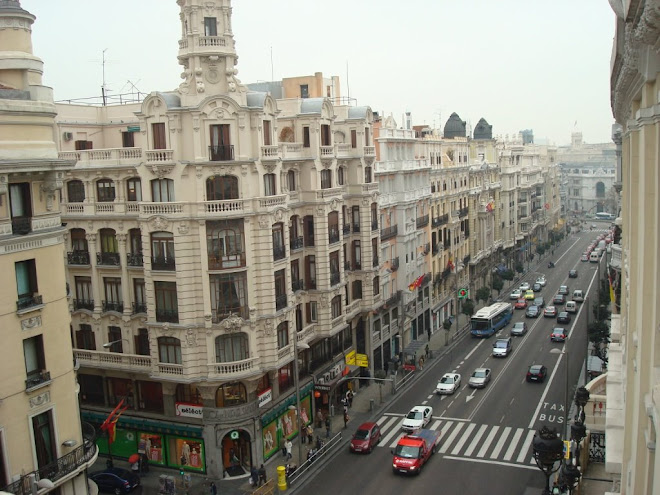
Not far from my apartment in 2002-2003
A Resource for All of Profe Nick's Spanish Students in Washington

Si tuviera un millón de dólares.... (If I had a million dollars....) [Cool, but not for free]
- Comcast "Selecto Pack"
Archivo del blog
-
▼
2010
(148)
- ► septiembre (20)
-
▼
marzo
(20)
- viernes, el veintiséis de marzo del dos mil diez
- jueves, el veinticinco de marzo del dos mil diez
- miércoles, el veinticuatro de marzo del dos mil diez
- martes, el veintitrés de marzo del dos mil diez
- lunes, el veintidós de marzo del dos mil diez
- viernes, el diecinueve de marzo del dos mil nueve
- jueves, el dieciocho de marzo del dos mil diez
- miércoles, el diecisiete de marzo del dos mil diez
- martes, el dieciséis de marzo del dos mil diez
- lunes, el quince de marzo del dos mil diez
- viernes, el doce de marzo del dos mil diez
- jueves, el once de marzo del dos mil diez
- miércoles, el diez de marzo del dos mil diez
- martes, el nueve de marzo del dos mil diez
- lunes, el ocho de marzo del dos mil diez
- viernes, el cinco de marzo del dos mil diez
- jueves, el cuatro de marzo del dos mil diez
- miércoles, el tres de marzo del dos mil diez
- martes, el dos de marzo del dos mil diez
- lunes, el primero de marzo del dos mil diez
-
►
2009
(164)
- ► septiembre (18)
Spanish Is All Around Us...Have You Considered...?
- -- Peeking at the Spanish Directions of a Purchased Household Item/Appliance and Trying to Make Sense of Some of It
- -- Setting Your TV to Spanish and Navigating It...Ask For Permission First
- -- Setting Your Cell Phone to Spanish and Navigating It
- -- Purchasing Food from the "Hispanic Foods" Supermarket Aisle and Following the Cooking Directions in Spanish
- -- Subscribing to "People en español" o "National Geographic en español"
- -- Checking out Spanish Children's Books at the Local Library
- -- Perusing a Free Spanish Newspaper from a Store Specializing in Latin American Groceries
- -- Using the Grocery Store Self Check-Out in Spanish
- -- Installing iTunes in Spanish
Spanish Study Links
Local Spanish Resources
- Univisión -- Canal 29 en la Tele en "el Eastside"
- "Día de los Muertos" Festival -- November 1-2, 2008 -- Seattle Center
- "Seattle Fiestas Patrias" Festival -- September 13-14, 2008 -- Seattle Center
- KWMG "La Magia" -- 1210 AM -- A Fusion of International Spanish
- KKMO "Radio Sol" -- 1360 AM -- Regional Mexican Music
- KXPA "La Buena" -- 1540 AM -- 88 hrs. Spanish Programming Weekly
- KDOW "La Jefa" -- 1680 AM -- Spanish Coverage of Seattle Sounders and Seattle Mariners Games
- KDDS "La Gran D" -- Radio 99.3 FM -- Modeled After Mexican Radio
Authentic Spanish Sources
Spanish Entertainment Links
Datos personales

- Señora Nick
- Any questions about the content of this blog should be directed via email to Profe Nick, not the Issaquah School District.
Madrid: Calle Gran Vía
Not far from my apartment in 2002-2003