Español Uno (1):
Today's Learning Objectives:
1. Discuss weekend plans by answering the following question:
¿Qué vas a hacer durante el fin de semana? (What are you going to do during the weekend?)
…Voy a ____r…. (I’m going to….)
Ejemplos (Examples):
--Voy a ir al partido de fútbol americano.
--Voy a dormir un montón.
--Voy a comer en Chipotle con mi familia.
--Voy a jugar videojuegos.
2. Discuss the word “the” during Geek Out Grammar Session #3.
In Spanish there are four ways of expressing the, as with the following examples: el libro, la muchacha, los gatos, las profesoras. If the word is masculine and singular, we use the word “el.” If the word is feminine and singular, we use the word “la.” If the word is masculine and plural, we use the word “los.” If the word is feminine and plural, we use the word “las.”
The majority of nouns in Spanish are readily apparent as feminine or masculine, based upon how the word ends. We already know that the letter “o” indicates a word is masculine, and the letter “a” indicates a word is feminine.
Some nouns in Spanish aren’t clearly feminine or masculine just by looking at their ending. For those not clearly masculine or feminine, we just need to memorize their gender.
**While it is an expectation that you use the appropriate word for “the” when you have time to edit what you are writing (or saying), do not let too much conscious thought about always choosing correctly stop your communication. Accidentally using the wrong word for “the” will not cause confusion for a native speaker.
3. Sing our song of the week: “Eres”
4. Practice our gestures.
5. Practice listening with two Paso a paso listening activities. Good job catching the missing information spoken by other speakers, and at a faster rate!
Homework: Review, review, review! Especially those fundamental questions.
Español Dos (2):
Today's Learning Objectives:
1. Read definitions of our chapter 2 vocabulary and choose the word being defined.
2. Sing our song of the week: “Eres”
3. Practice our gestures.
4. Write a composition about our daily routine.
…Mi rutina diaria por la mañana empieza con despertarme a las seis. Segundo me ducho por siete minutos. Me cepillo los dientes y me cepillo el pelo. Me visto con pantalones, los zapatos, y una camiseta. Me seco el pelo después de peinarme el pelo. Mi madre cocina el desayuno para mí. Yo como el pan tostado con los huevos o el cereal con leche. Por lo menos yo como la fruta. Mi madre o mi padre me maneja a la escuela de PCFC a las siete y quince. Mi rutina diaria por la mañana es fácil porque yo tengo mucho tiempo por la mañana….
5. Quick grammar discussion of common errors in student essays:
Careful! “Me despierto” is different from “despertarme.” “Me despierto” communicates “I wake up,” while “despertarme” communicates “to wake myself up.” You would use the form “despertarme” in phrases like the following:
--Tengo que despertarme.
--Necesito despertarme.
--Debo despertarme.
--No quiero despertarme.
--Voy a despertarme.
--No puedo despertarme.
6. Receive a vocabulary list of fundamental reading words from Spanish 1 and the beginning of Spanish 2. While I don’t expect that you remember every word/phrase, I do expect that you prioritize learning those you have forgotten. Knowing the meaning of words like luego, por eso, ya, sobre, etc. will make a big difference in your reading abilities in Spanish.
Homework: Finish defining the reading vocabulary words/phrases. Consider making flashcards for those you did not remember.
skip to main |
skip to sidebar

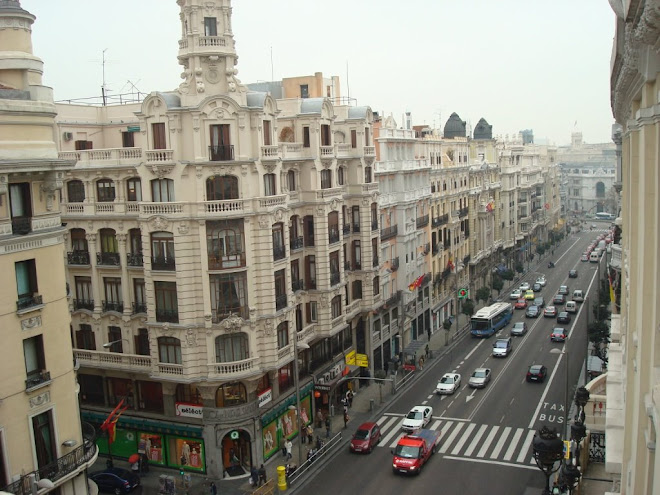
Not far from my apartment in 2002-2003
A Resource for All of Profe Nick's Spanish Students in Washington

Si tuviera un millón de dólares.... (If I had a million dollars....) [Cool, but not for free]
- Comcast "Selecto Pack"
Archivo del blog
-
►
2010
(148)
- ► septiembre (20)
-
►
2009
(164)
- ► septiembre (18)
-
▼
2008
(72)
-
▼
noviembre
(15)
- lunes, el veinticuatro de noviembre del dos mil ocho
- viernes, el veintiuno de noviembre del dos mil ocho
- jueves, el veinte de noviembre del dos mil ocho
- miércoles, el diecinueve de noviembre del dos mil ...
- martes, el dieciocho de noviembre del dos mil ocho
- lunes, el diecisiete de noviembre del dos mil ocho
- viernes, el catorce de noviembre del dos mil ocho
- jueves, el trece de noviembre del dos mil ocho
- miércoles, el doce de noviembre del dos mil ocho
- lunes, el diez de noviembre del dos mil ocho
- viernes, el siete de noviembre del dos mil ocho
- jueves, el seis de noviembre del dos mil ocho
- miércoles, el cinco de noviembre
- martes, el cuatro de noviembre del dos mil ocho
- lunes, el tres de noviembre de dos mil ocho
- ► septiembre (20)
-
▼
noviembre
(15)
Spanish Is All Around Us...Have You Considered...?
- -- Peeking at the Spanish Directions of a Purchased Household Item/Appliance and Trying to Make Sense of Some of It
- -- Setting Your TV to Spanish and Navigating It...Ask For Permission First
- -- Setting Your Cell Phone to Spanish and Navigating It
- -- Purchasing Food from the "Hispanic Foods" Supermarket Aisle and Following the Cooking Directions in Spanish
- -- Subscribing to "People en español" o "National Geographic en español"
- -- Checking out Spanish Children's Books at the Local Library
- -- Perusing a Free Spanish Newspaper from a Store Specializing in Latin American Groceries
- -- Using the Grocery Store Self Check-Out in Spanish
- -- Installing iTunes in Spanish
Spanish Study Links
Local Spanish Resources
- Univisión -- Canal 29 en la Tele en "el Eastside"
- "Día de los Muertos" Festival -- November 1-2, 2008 -- Seattle Center
- "Seattle Fiestas Patrias" Festival -- September 13-14, 2008 -- Seattle Center
- KWMG "La Magia" -- 1210 AM -- A Fusion of International Spanish
- KKMO "Radio Sol" -- 1360 AM -- Regional Mexican Music
- KXPA "La Buena" -- 1540 AM -- 88 hrs. Spanish Programming Weekly
- KDOW "La Jefa" -- 1680 AM -- Spanish Coverage of Seattle Sounders and Seattle Mariners Games
- KDDS "La Gran D" -- Radio 99.3 FM -- Modeled After Mexican Radio
Authentic Spanish Sources
Spanish Entertainment Links
Datos personales

- Señora Nick
- Any questions about the content of this blog should be directed via email to Profe Nick, not the Issaquah School District.
Madrid: Calle Gran Vía
Not far from my apartment in 2002-2003