Español Uno (1):
Today’s Learning Objectives:
1. Practice spelling unknown words in Spanish
--a-ver-i-guar
--na-vi-deñ-a
--hu-ér-fa-no
--a-le-grí-a
--ca-lle-jón
2. Complete 4-5 in the workbook and check answers.
3. Sing our first holiday song: “Va a nevar”
4. Complete dictation #5.
5. Take our food vocabulary quiz (chapter 4 & 12 food vocabulary).
Homework: None
Español Dos (2):
Announcement: I am offering you a significant opportunity in regards to your final exam. This opportunity has been motivated by all of you who have worked very hard to significantly raise your skill level since the beginning of the year. Due to the comprehensive nature of your exams, I feel very comfortable letting your final exam score supersede your class average (assuming you perform better than your average). If you perform worse on the final exam than your class average going into the test, I will treat the final exam as it would have ordinarily been treated (10% of your grade). SEIZE THIS OPPORTUNITY!
Today’s Learning Objectives:
1. Expand our knowledge of accent marks in Spanish. You already have two significant rules (see previous posts). Today we received more information, pertaining to a third rule. This rule concerns dipthongs, and helps us more accurately divide a word into its syllables.
Rule #3:
--A,E and O are “strong” vowels.
--I and U are “weak” vowels.
--When a strong vowel combines with a weak vowel, they form a single sound (“dipthong”).
--When two weak vowels combine, they form a single sound (“dipthong”).
Examples: pia-no, viu-do
Break the following words into their syllables. (The dipthongs are underlined.):
--ciu-dad
--pie
--vein-te
--pin-güi-no
--au-to-mó-vil
--a-gua
--deu-das
--a-pa-guen
--gui-san-tes
--man-te-qui-lla
2. Sing our first holiday song: “Va a nevar”
3. Practice the skill of circumlocution with our chapter four vocabulary. Utilizing the suggested starter phrases for circumlocution (…for an activity back in chapter two), write ten definitions for you chapter four vocabulary. Students guess the target words of others’ definitions.
4. Illustrate ten scenes from chapter two of Pobre Ana bailó tango.
--Después de ir a México, Ana quería visitar otros países.
--Ana leyó un libro sobre la Argentina.
--Ana supo que el tango es muy popular en la Argentina.
--Ana supo que había un programa escolar para ir a la Argentina.
--Ana se puso muy contenta al oír eso.
--Ana escribió una lista de lo que quería saber.
--Quería saber más sobre la comida.
--Quería saber más sobre las diversiones.
--No tenía mucho dinero, pero eso no le importaba.
--Iba a vivir con una familia argentina.
5. (4th & 6th periods only): Practice retelling chapter two of Pobre Ana bailó tango to a partner.
Homework: None.
skip to main |
skip to sidebar

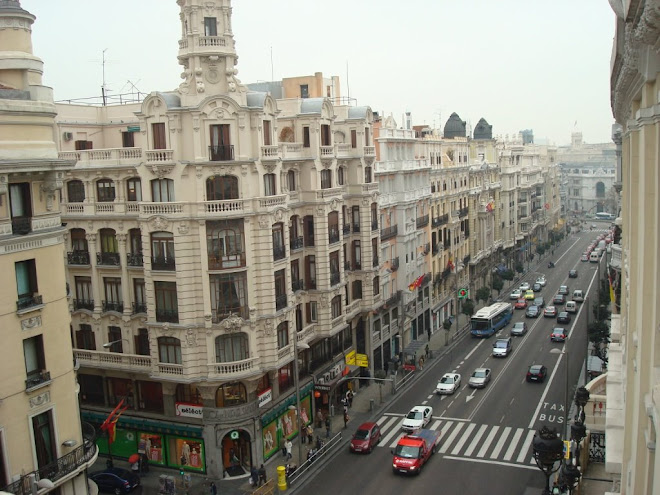
Not far from my apartment in 2002-2003
A Resource for All of Profe Nick's Spanish Students in Washington

Si tuviera un millón de dólares.... (If I had a million dollars....) [Cool, but not for free]
- Comcast "Selecto Pack"
Archivo del blog
-
►
2010
(148)
- ► septiembre (20)
-
►
2009
(164)
- ► septiembre (18)
-
▼
2008
(72)
-
▼
diciembre
(14)
- martes, el dieciséis de diciembre del dos mil ocho
- lunes, el quince de septiembre del dos mil ocho
- viernes, el doce de diciembre del dos mil ocho
- jueves, el once de diciembre del dos mil ocho
- miércoles, el diez de diciembre del dos mil ocho
- martes, el nueve de diciembre del dos mil ocho
- lunes, el ocho de diciembre del dos mil ocho
- viernes, el cinco de diciembre del dos mil ocho
- jueves, el cuatro de diciembre del dos mil ocho
- miércoles, el tres de diciembre del dos mil ocho
- martes, el dos de diciembre del dos mil ocho
- lunes, el primero de diciembre del dos mil ocho
- miércoles, el veintiséis de noviembre del dos mil ...
- martes, el veinticinco de noviembre del dos mil ocho
- ► septiembre (20)
-
▼
diciembre
(14)
Spanish Is All Around Us...Have You Considered...?
- -- Peeking at the Spanish Directions of a Purchased Household Item/Appliance and Trying to Make Sense of Some of It
- -- Setting Your TV to Spanish and Navigating It...Ask For Permission First
- -- Setting Your Cell Phone to Spanish and Navigating It
- -- Purchasing Food from the "Hispanic Foods" Supermarket Aisle and Following the Cooking Directions in Spanish
- -- Subscribing to "People en español" o "National Geographic en español"
- -- Checking out Spanish Children's Books at the Local Library
- -- Perusing a Free Spanish Newspaper from a Store Specializing in Latin American Groceries
- -- Using the Grocery Store Self Check-Out in Spanish
- -- Installing iTunes in Spanish
Spanish Study Links
Local Spanish Resources
- Univisión -- Canal 29 en la Tele en "el Eastside"
- "Día de los Muertos" Festival -- November 1-2, 2008 -- Seattle Center
- "Seattle Fiestas Patrias" Festival -- September 13-14, 2008 -- Seattle Center
- KWMG "La Magia" -- 1210 AM -- A Fusion of International Spanish
- KKMO "Radio Sol" -- 1360 AM -- Regional Mexican Music
- KXPA "La Buena" -- 1540 AM -- 88 hrs. Spanish Programming Weekly
- KDOW "La Jefa" -- 1680 AM -- Spanish Coverage of Seattle Sounders and Seattle Mariners Games
- KDDS "La Gran D" -- Radio 99.3 FM -- Modeled After Mexican Radio
Authentic Spanish Sources
Spanish Entertainment Links
Datos personales

- Señora Nick
- Any questions about the content of this blog should be directed via email to Profe Nick, not the Issaquah School District.
Madrid: Calle Gran Vía
Not far from my apartment in 2002-2003